
By: Xihe-
On: 23 Mar 2026




| Sub-Total : | $23.30 |
| Eco Tax (-2.00) : | $4.52 |
| VAT (20%) : | $5.66 |
| Total : | $33.48 |
By: Xihe-
On: 23 Mar 2026
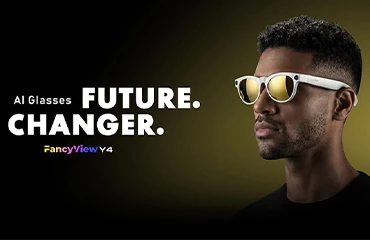
During this year’s National People’s Congress and Chinese People’s Political Consultative Conference sessions, NPC deputy Zhong Bo wore AI glasses to the meetings for the second consecutive year. An Arab journalist reported that these “Made in China” AI glasses attracted many foreign colleagues to try them on. In late February, German Chancellor Merz tested a pair of AI glasses during his visit to Hangzhou… These smart wearable devices, which combine video recording, translation, and teleprompter functions, are now finding their way into the lives of ordinary people.

This year’s Government Work Report calls for the development of a new model of the smart economy. It proposes deepening and expanding the “AI+” initiative, accelerating the adoption of next-generation smart devices and intelligent systems, promoting the large-scale commercial application of AI in key industries and sectors, and fostering new business models and formats that are inherently smart.
From the opening of a series of “first-of-their-kind tech stores” in prominent shopping districts to the “tech-themed New Year’s goods” that sold out during this year’s Spring Festival, entrepreneurs in the smart hardware sector are working hard to move their products off the “display shelves” and into consumers’ “shopping carts.” For them, this surge in sales is both a reward and a sign of the challenges they must overcome to reach a broader audience.
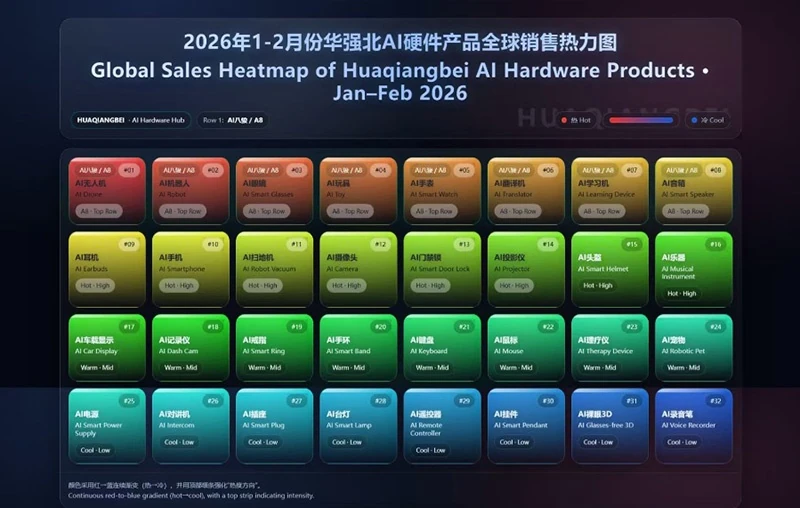
“Huaqiangbei’s ‘Eight AI Champions’” was a buzzword at this year’s National People’s Congress and Chinese People’s Political Consultative Conference. This refers to a best-seller list previously released by the Huaqiangbei Subdistrict Office, and related products were also on display at the Guangdong delegation’s open-door event.
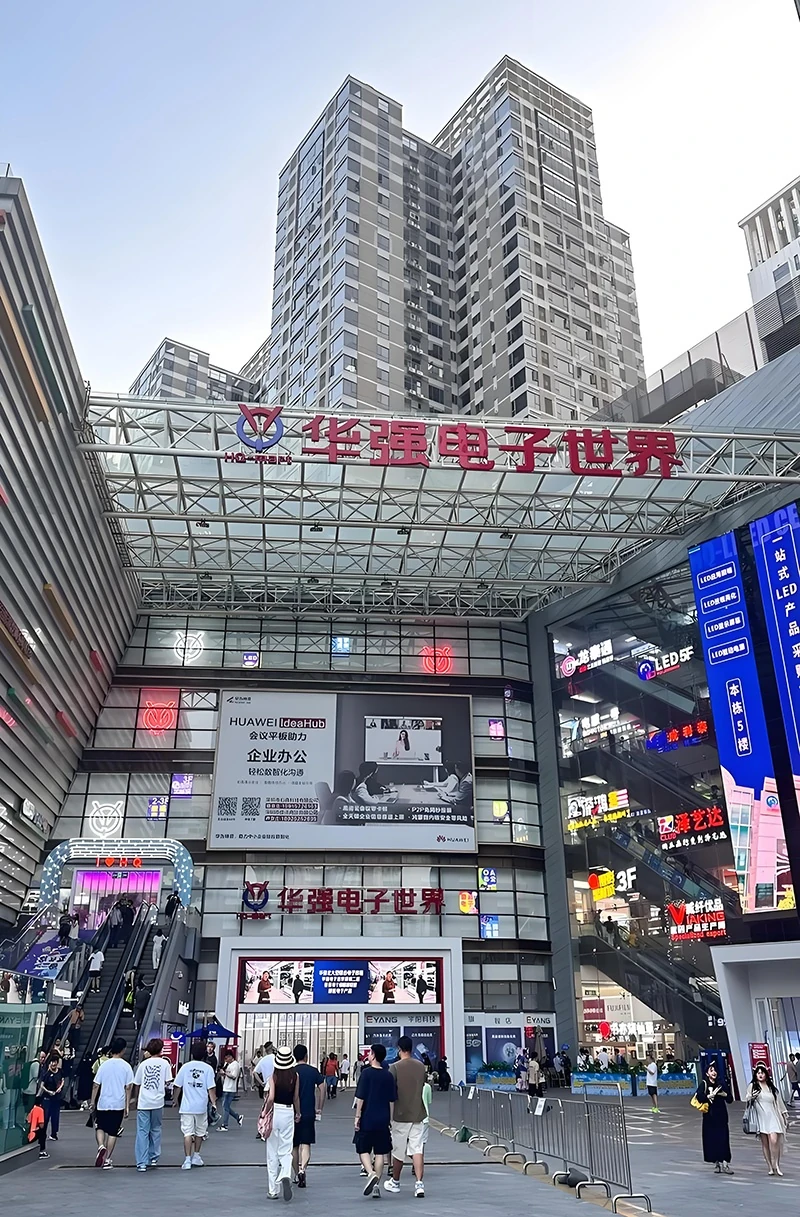
The Huaqiangbei commercial district in Shenzhen is often seen as a microcosm of China’s smart manufacturing sector. According to data from the Huaqiangbei Subdistrict Office, overall sales of tech products in Huaqiangbei have risen by more than 30% over the past two months compared to usual levels, with AI glasses emerging as a standout category, seeing sales surge by 70% to 80%. A Shenzhen industry insider told a reporter that, even earlier, large numbers of foreign merchants had been arriving in Huaqiangbei with suitcases to purchase AI glasses.
It is worth noting that the use of facial recognition in offline retail settings—such as with robots and AI glasses—is also evolving. Since 2025, numerous tech brands have opened their first stores in popular commercial districts: Yushu Technology’s first global store opened in Beijing’s Chaoyang District, and Lingban Technology’s first flagship store opened in Wuhan.
A representative from the Shenzhen AI Glasses Industry Alliance told reporters that Shenzhen, which is striving to become the “world’s leading city for AI glasses,” already has specialty stores offering more than 40 models from over 20 brands.
According to Spring Festival sales data, AI glasses and smart guitars have both performed well. Among older consumers, chess-playing robots designed to provide companionship have also proven popular. The store manager noted that consumers place a high value on a product’s practicality; for example, within the smart glasses category, AI glasses that integrate multiple daily and office functions are preferred over AR glasses that emphasize entertainment.
After the frenzy comes a new challenge.
During the 2026 Spring Festival, smart hardware products across various industries were temporarily dubbed “tech-themed New Year's gifts.” Once the Spring Festival season ended, entrepreneurs in this field entered a critical phase of commercialization across numerous sectors.
The Gaogong Robotics Industry Research Institute forecasts that domestic shipments of humanoid robots are expected to rise to 62,500 units in 2026, up from 18,000 units last year. Regarding smart glasses, International Data Corporation (IDC) forecasts that global shipments will exceed 23.687 million units by 2026, with China’s market alone surpassing 4.915 million units. However, the market is becoming increasingly crowded, with several leading internet companies and new energy vehicle manufacturers now entering the fray.
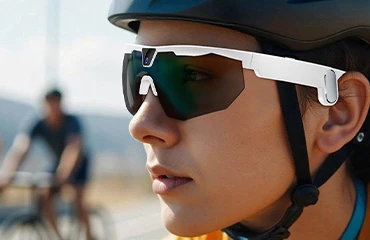
As the latest iteration of wearable devices, AI glasses equipped with camera functions cater to young people’s desire to document their lives while also fulfilling their need to showcase themselves on social media in trendy ways. Yuan Shuai, Deputy Director of the Investment Department at the China Urban Development Research Institute, noted that products like these will not merely be a short-lived fad during holidays. “As technology costs continue to decline and application scenarios expand, tech products will gradually become part of everyday consumption, marking a long-term trend; however, the surge in demand during the holiday season will remain an annual sales peak.”
Startups in the AI glasses and robotics sectors are benefiting from dual opportunities in brand visibility and market scale. Strong product sales validate market demand, while increased public awareness reduces the cost of market education, encouraging more consumers to try similar products and opening up growth opportunities for the industry as a whole. Market momentum will attract more players to the sector, shifting industry competition from a battle of technology to a comprehensive contest involving real-world application and user engagement. “Startups must maintain their technological edge while rapidly building a user ecosystem to avoid falling into a trap of homogenized competition.”
Source: China Youth Daily Authors: Chen Yulong and Wang Congcong
Please log in to your member account first. *



0 Comments